
 English

Views: 0 Author: Site Editor Publish Time: 2026-09-20 Origin: Site


Selecting the wrong spray equipment sabotages your harvest. You end up wasting costly chemicals. Poor canopy penetration and dangerous drift compromise your crop yields. Agricultural operations face immense complexity every single season. Variables like row spacing, canopy density, and available tractor horsepower dictate your daily needs. Extreme weather and hilly topography mean no universal "best" machine exists. We created this guide to break down essential evaluation criteria. You will learn how to size and configure equipment for high-value crops like apples, pears, citrus, and grapes. Let us help you navigate pump technology, tank capacity, and drift mitigation strategies. You will confidently select the exact machinery your farm demands.
Crop architecture drives equipment choice: Dense citrus canopies require higher air volume (CFM) than narrow vineyard rows.
Capacity vs. Compaction: Larger tanks reduce refill trips but increase soil compaction and require higher tractor horsepower (PTO), especially on hilly terrain.
Drift mitigation is a compliance and cost issue: Modern nozzle technology and adjustable air delivery systems are critical for reducing chemical waste and meeting environmental standards.
Dealer support trumps initial price: Long-term ROI depends heavily on local parts availability and calibration support.
Every agricultural environment demands a tailored approach. You cannot treat a towering citrus tree like a short grape vine. Canopy architecture dictates your equipment design. We must match machinery to specific plant structures to achieve optimal coverage.
Citrus trees present unique challenges. They feature dense, evergreen foliage year-round. Leaves overlap tightly and block spray droplets from reaching the interior. You need serious power to penetrate these physical barriers. Operating a dedicated citrus sprayer requires high-horsepower tractors. This equipment pushes massive air volumes through thick leaves. You must focus on large-diameter fans. High-volume output ensures inner-canopy coverage. Insects and fungal diseases thrive in the dark center of citrus trees. Your equipment must displace stagnant air trapped inside the canopy.
Common Mistakes in Citrus Spraying:
Underpowering the tractor PTO.
Using small axial fans designed for sparse foliage.
Driving too fast to allow proper air replacement.
Modern apple and pear production looks very different today. We see a massive shift toward high-density trellised systems. These 2D canopies differ wildly from traditional free-standing trees. When selecting an apple orchard sprayer, you must distinguish between these layouts. High-density trellises require tower sprayers or directed-air systems. Traditional spacing still relies on massive radial air blasts. Your main focus should be uniform vertical coverage. You must adjust air deflection to match exact tree heights. Spraying the sky wastes expensive chemicals. It also invites regulatory fines.
Best Practices for Pome Fruits:
Adjust top deflectors downward for short trees.
Target the fruiting zone precisely.
Match fan speed to canopy depth.
Vineyard operations navigate incredibly tight spaces. Narrow rows demand compact, low-profile designs. You need equipment that will not snag on trellises. A specialized vineyard sprayer easily navigates tight row spacing. Many modern farms use over-the-row or multi-row configurations. This approach slashes application time. Droplet sizing requires precise control. Grape skins are notoriously smooth. Large droplets quickly merge, run off, and pool on the soil. You want fine droplets that adhere to the fruit. Mitigating drift into adjacent rows also remains a top priority.
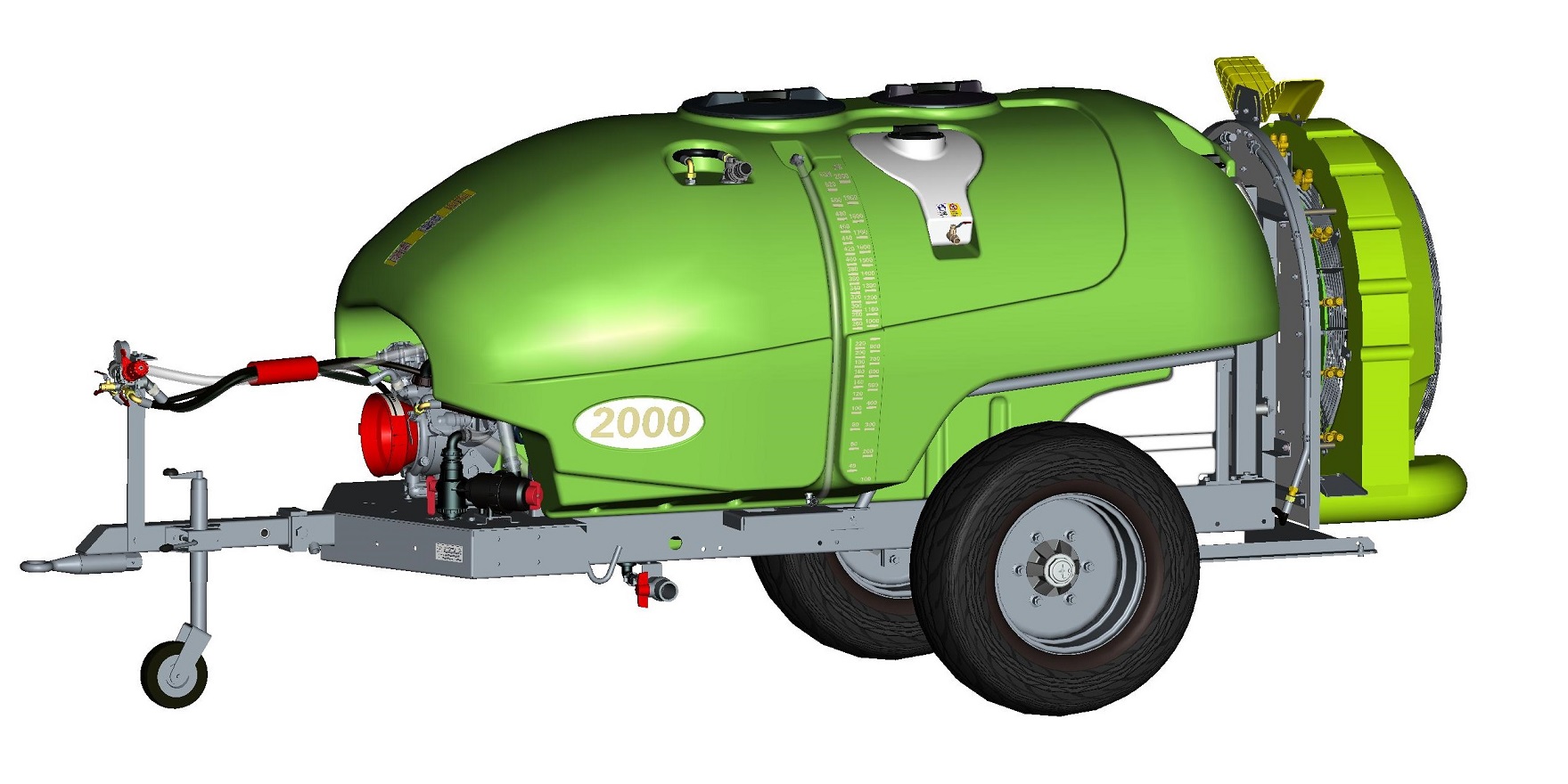
Solution categories depend on your operational scale. You must choose a platform matching your acreage, terrain, and tractor fleet. Let us assess the three primary configurations used in modern farming.
Mounted systems attach directly to the tractor. They excel in small orchards and steep vineyards. Operations prioritizing extreme maneuverability rely on these units. They easily navigate tight headlands where pulled units would jackknife. However, they carry significant limitations. You face lower tank capacities. This means frequent, frustrating refill trips. Tractor rear axles possess strict weight limits. Overloading the hitch risks mechanical failure and flips on steep hills.
This category remains the industry standard for commercial acreage. A trailed Orchard Sprayer handles massive workloads. These units offer high capacity, often holding up to 1,000 gallons or more. They feature dedicated, powerful fan configurations. You get much better weight distribution across multiple axles. However, trailed units suffer distinct drawbacks. They require a wider turning radius. Heavy loaded tanks cause severe soil compaction. You also need increased PTO horsepower to run both the pump and large fans.
Many growers modify base units using towers or conveyors. These attachments reshape the air column to match tall or narrow canopies. The primary benefit lies in drift reduction. Towers direct horizontal air straight into the foliage. Standard radial fans disperse air in a massive circle. This radial dispersion wastes product upward into the air and downward into the dirt. Directed-air systems deliver chemicals exactly where they belong.
Table: Sprayer Configuration Comparison
Configuration Type | Ideal Application | Key Advantages | Main Drawbacks |
|---|---|---|---|
3-Point Hitch (Mounted) | Steep hills, small blocks | Highly maneuverable, low cost | Small tank size, frequent refills |
Trailed Air Blast | Large commercial acreage | High capacity, massive airflow | Soil compaction, high HP needed |
Tower / Directed-Air | High-density, trellised crops | Low drift, excellent precision | Higher initial cost, taller profile |
Evaluating hardware requires looking past marketing claims. We must connect technical features to field outcomes. Performance metrics directly influence your return on investment.
Evidence proves high pressure does not compensate for insufficient air volume. Air physically replaces the ambient air sitting inside the canopy. Velocity carries the chemical droplet. Volume actually provides the comprehensive coverage. You must size the fan appropriately for your tree height and foliage density. Too much velocity induces "blow-through". This phenomenon blasts product straight through the leaves, wasting it on the other side of the tree. An efficient orchard sprayer perfectly balances velocity and volume.
Pumps act as the beating heart of your equipment. High-pressure diaphragm pumps remain the standard for precise nozzle control. They offer incredible durability against harsh, abrasive chemicals. Centrifugal pumps move massive fluid volumes but struggle at high pressures. Your chosen flow rate (GPM) must comfortably exceed maximum nozzle output. It must also provide enough excess flow for vigorous tank agitation. Undersized pumps burn out quickly and cause uneven chemical application.
Tank material dictates maintenance routines and equipment lifespan. Polyethylene tanks resist severe impacts. They bounce off tree trunks and clean up easily. Fiberglass tanks remain rigid and crack under heavy impact. However, you can patch and repair fiberglass cheaply on the farm. Agitation systems demand equal scrutiny. Assessing mechanical versus hydraulic bypass agitation is critical. Proper agitation prevents heavy wettable powders from settling into sludge during transport.
Purchasing machinery is only the first step. Implementation realities dictate your ultimate success. You must mitigate operational risks to maintain peak efficiency.
Calibration isn't a one-time event. You cannot set it in spring and forget it. Constant wear on nozzles alters flow rates rapidly over a single season. A worn orifice applies significantly more chemical than intended. This leads to costly over-application and potential crop burn. You must establish a routine testing protocol.
Routine Testing Protocol Steps:
Attach water-sensitive paper throughout the target canopy.
Fill the tank with clean water only.
Calculate your exact tractor speed and PTO RPM.
Operate the equipment through the test row.
Analyze the paper for droplet density and uniform spread.
Drift management represents a major legal and financial liability. You should utilize air-induction (AI) nozzles to minimize off-target drift. These nozzles create larger, air-filled droplets that fall faster. Adjusting your fan pitch also keeps droplets directed at the target. You must carefully consider regulatory compliance. Buffer zones protect nearby waterways and residential areas. Specific pesticide application rules govern wind speed limits. Violating these standards invites massive fines and community backlash.
Breakdowns always happen at the worst possible times. High-wear parts fail routinely. Nozzle tips, pump diaphragms, and PTO shafts endure immense stress. A cheaper upfront machine costs dramatically more if replacement parts take two weeks to arrive. Missing a critical blight-spraying window destroys entire harvests. Always prioritize equipment utilizing standardized, easily accessible components.
Narrowing down options requires a logical framework. You must eliminate incompatible machinery immediately. Follow these actionable steps to build a viable shortlist.
Your existing tractor fleet dictates what you can pull. Match the PTO horsepower requirements meticulously. A massive fan drains immense engine power. You also must check loaded weight limits. A 1,000-gallon tank weighs over 8,000 pounds when full. Pulling that weight up a muddy hill requires serious traction and braking power.
Measure your physical farming environment. Find your tightest turning headland. Measure your narrowest row at peak summer canopy growth. Verify the machinery's physical footprint. Axle width must comfortably clear your root zones. Tall tower attachments must clear overhead netting or low-hanging power lines.
Never underestimate the value of your local dealer. Prioritize brands backed by certified local technicians. Ask about their on-the-shelf parts stock. Fast seasonal service response times save harvests. A premium machine loses all value if the dealer ignores your emergency service calls during spring bloom.
The best machinery perfectly balances tank capacity with soil health and compaction limits.
Air volume must align directly with your specific canopy density to prevent chemical waste.
Equipment specifications only matter if they translate to field realities and local conditions.
Base your final purchase on local dealer support, ease of routine calibration, and your exact crop architecture.
Take action today by walking your fields and measuring your tightest rows. Consult with a local agricultural equipment specialist. Ask them to conduct a spray coverage test on your property. Review your tractor PTO compatibility before signing any purchase agreements.
A: Requirements vary based on fan size and terrain slopes. Typically, you need a 60-80 HP minimum to run the fan, operate the pump, and pull the loaded weight up hills safely.
A: Focus on material wear rather than time. Ceramic nozzles last much longer than brass or plastic. You must mandate regular flow-rate testing to measure wear accurately rather than guessing.
A: Yes, but it requires significant adjustments. You will need adjustable air deflectors or towers. Nozzle shut-offs are necessary to accommodate the drastic differences in canopy height and narrow row widths.
A: Axial fans deliver high-volume radial push, ideal for large traditional trees. Centrifugal fans produce high-velocity ducted air, perfect for pushing targeted spray through towers into dense, narrow canopies.