
 English

Views: 0 Author: Site Editor Publish Time: 2026-09-25 Origin: Site


Choosing the right sprayer dictates your chemical application efficiency, canopy health, and daily operational routines. You need robust equipment capable of meeting rigorous seasonal demands across your entire property. Getting this crucial choice wrong often leads to wasted chemicals, poor pest control, and compromised crop yields. Traditional mechanical power offers proven, unyielding reliability for these demanding tasks. Meanwhile, emerging electric models promise reduced fossil fuel dependency, lower local emissions, and quieter operation. Growers therefore face a core conflict between trusting established, heavy-duty technology and adopting innovative, precision-focused alternatives. We provide an objective, evidence-based evaluation of both systems in this comprehensive guide. Commercial operators and mid-sized orchards will learn exactly how to select the best equipment. You can confidently align your ultimate choice with your specific acreage, canopy density, and existing tractor fleet capabilities.
Canopy Penetration: PTO-driven systems remain the industry standard for pushing chemicals through dense, mature canopies using high-capacity fans.
Operational Costs: Electric sprayers drastically reduce fuel and routine maintenance costs but carry distinct limitations regarding battery duration and peak output.
Tractor Dependence: PTO sprayers require a dedicated tractor with specific horsepower (HP) ratings; electric sprayers offer more mounting flexibility (ATV, UTV, or smaller tractors).
Adoption Reality: Hybrid fleets are becoming common, utilizing electric systems for targeted or young plantings and PTO systems for heavy, full-canopy applications.
You must understand the mechanical foundation before upgrading your equipment. A PTO Orchard Sprayer draws mechanical power directly from your tractor. It utilizes the standard Power Take-Off shaft. This physical connection transfers rotational energy straight into the sprayer pump. You must match the tractor horsepower exactly to the equipment requirements. Every pump and fan combination demands a specific minimum energy output.
Manufacturers build these robust units for high-volume, continuous field operation. They thrive under punishing agricultural conditions. You rarely experience downtime for battery charging. You simply refuel the diesel tractor and continue spraying. The mechanical linkage ensures consistent power delivery. However, it binds the fan speed directly to the engine RPM. You cannot adjust airflow independently of engine speed. This rigid connection dictates how you navigate your orchard rows.
Modern alternatives discard the heavy mechanical drive shaft entirely. An Electric Orchard Sprayer relies on advanced onboard battery banks. Some designs utilize an external electrical generator system instead. This architecture completely transforms application control. You successfully decouple the pump and fan speed from ground speed. Operators gain precise, independent control over every spray parameter.
You can slow the tractor over rough terrain without dropping fan RPM. The electrical architecture also features significantly fewer moving mechanical parts. You eliminate heavy gearboxes and multiple drive belts. You no longer need to constantly lubricate spinning drive shafts. This simplified engineering reduces daily inspection requirements. It keeps your crew focused on actual chemical application.
Table 1: Core Mechanical Differences Between PTO and Electric Systems
Feature Category | PTO Systems | Electric Systems |
|---|---|---|
Power Source | Direct mechanical drive shaft | Onboard batteries or generators |
Component Complexity | High (belts, gearboxes, shafts) | Low (direct drive motors, wiring) |
Speed Control | Tied directly to engine RPM | Fully independent and adjustable |
Operational Duration | Continuous (limited only by diesel) | Shift-based (requires recharging) |
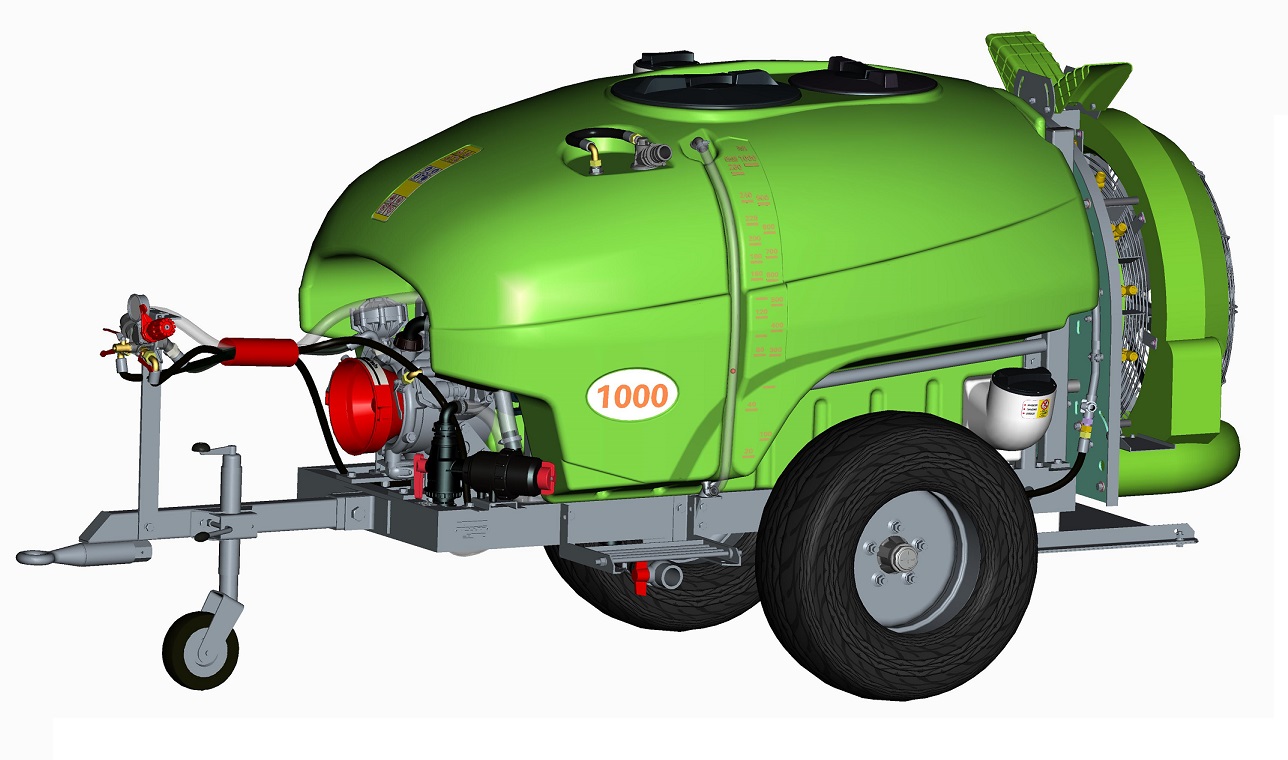
Achieving uniform coverage in mature orchards presents a massive physical challenge. Almond, apple, and citrus trees develop extremely dense foliage layers. You must push massive volumes of air to breach these outer walls. A traditional air-assisted orchard sprayer running on mechanical power dominates here. High-horsepower tractors deliver unmatched, sustained wind velocity. This raw force effectively disrupts overlapping leaves.
The aggressive turbulence coats the hidden undersides of every leaf. Disease prevention relies entirely on this thorough, deep penetration. Fungi and pests hide in the darkest canopy regions. Only sheer, sustained mechanical force can reach them reliably. High-capacity PTO fans generate the immense Cubic Feet per Minute (CFM) required. They maintain this heavy output hour after hour without fading.
Electric sprayers introduce a new era of precision control. Operators can adjust fan speeds instantly from the cab. You change airflow without altering the primary tractor engine RPM. This granular control minimizes chemical drift significantly. You can dial down the fan speed when passing empty gaps. You can reduce output near sensitive borders or residential areas.
This precision protects neighboring crops from accidental chemical exposure. It also saves valuable chemical mixtures from blowing away. Intelligent electric controllers can even automate these adjustments. They adapt the spray pattern based on real-time canopy sensors. This targeted approach prevents harmful environmental contamination. It keeps your farming operation compliant with strict local regulations.
You must acknowledge the practical risks of transitioning to battery power. Relying on a fully electric system for dense canopies carries distinct dangers. Electric fans might fail to sustain the required CFM over a long shift. High-volume penetration demands continuous maximum power draw. This intense load depletes onboard battery reserves rapidly.
Inadequate chemical penetration leaves your expensive crop vulnerable to disease. Fungal outbreaks spread quickly if spray coverage remains superficial. You must verify the sustained output capabilities before purchasing. Do not rely solely on peak performance numbers. Real-world canopy penetration requires relentless, enduring air volume. Electric systems must prove their endurance under actual field conditions.
Integrating new equipment impacts your entire machinery fleet. A mechanical tractor orchard sprayer ties up a specific class of tractor. If a PTO sprayer requires 60 HP, that tractor remains locked in. You cannot utilize it for lighter tasks during the busy spray season. This creates a severe logistical bottleneck for smaller operations.
Electric sprayers solve this specific fleet utilization problem. They offer incredible mounting and towing flexibility. You gain several new operational advantages:
You can tow electric units using lower-HP tractors.
You can mount smaller systems onto heavy-duty UTVs.
You can integrate them seamlessly onto emerging autonomous platforms.
You successfully free up heavy machinery for harvesting or mowing.
Orchard topography dictates how you deploy your equipment. Heavy PTO setups present substantial terrain challenges. Trailed units carrying 500-gallon tanks require immense traction. They easily contribute to severe soil compaction over time. Deep ruts destroy root zones and hinder water drainage.
Electric systems generally weigh much less than their mechanical counterparts. This weight reduction helps minimize rutting in wet spring conditions. You protect your orchard floor from permanent structural damage. However, you must consider the durability of electronic components. Rough terrain creates intense, continuous vibrations. These shocks can impact sensitive controller boards. You must ensure manufacturers properly ruggedize all exposed wiring. Electronic connections must survive years of punishing field environments.
Your specific agronomic needs should drive your final purchasing decision. A mechanical PTO orchard sprayer remains the undisputed champion for heavy workloads. You should confidently choose this traditional system under several specific conditions. We recommend mechanical setups for the most demanding agricultural environments.
You manage large acreage requiring 8-to-12-hour continuous spray shifts.
Your orchard consists of mature trees requiring aggressive air-assisted penetration.
You operate in regions lacking reliable electrical charging infrastructure.
You already own a fleet of suitably sized, reliable utility tractors.
You demand proven, uninterrupted high-CFM performance all day long.
Modern farming practices increasingly favor precision and sustainability. An electric orchard sprayer provides distinct advantages for progressive operations. You should embrace this technology if your farm matches modern profiles. It completely transforms how you manage daily applications.
You operate a high-density, modern trellis orchard or vineyard.
Excessive air volume typically causes unacceptable chemical drift on your property.
Reducing noise pollution and cutting local carbon emissions rank highly.
You want the flexibility to tow the unit with a smaller UTV.
You prefer digital integration and precise, independent fan control.
The choice between a PTO and an electric orchard sprayer is complex. It is not about which technology is inherently superior overall. Instead, you must determine which system aligns perfectly with your operation. You must evaluate your canopy size, labor force, and fleet availability honestly. Mechanical systems deliver the brute force necessary for mature, towering trees. Electric systems offer unmatched precision for modern, high-density plantings.
You should immediately audit your current chemical coverage rates. Analyze your tractor utilization to identify seasonal bottlenecks. Consult directly with an experienced agricultural equipment dealer next. You must arrange a comprehensive in-field demonstration. Verify that the chosen system meets your specific CFM requirements. Ensure it handles your unique terrain realities before making a final commitment.
A: Currently, top-tier electric sprayers can match the output of mid-range PTO sprayers. However, for extreme high-volume requirements, high-HP PTO systems still hold a distinct power advantage. Very tall or exceptionally dense mature trees require the brute, sustained mechanical force only a heavy tractor provides.
A: Run times vary heavily based on pump pressure and fan speed. Most commercial units are engineered for 4 to 8 hours of continuous operation. You must factor charging infrastructure into your operational planning. Keeping extra battery packs on hand prevents unexpected application downtime.
A: While some third-party conversion kits exist, they are often complex. These unofficial modifications almost always void OEM warranties. It is generally more reliable to purchase a purpose-built electric unit. Retrofitting an aging mechanical system rarely yields optimal electrical performance or long-term durability.
A: Electric systems often integrate natively with smart controllers and digital flow meters. This advanced architecture makes real-time calibration incredibly simple. Digital spray-record compliance becomes much easier to manage. Traditional mechanical PTO setups require more manual calculation and physical adjustment to achieve precise calibration.