
 English

Views: 0 Author: Site Editor Publish Time: 2026-03-24 Origin: Site


When sizing a pump for a big pump sprayer, one of the smartest questions is whether to build in a flow and pressure margin. In most cases, the answer is yes—a practical margin is important for stable real-world performance. Many buyers size a pump only to the current nozzle flow requirement on paper, which may seem efficient but often causes problems in actual field use. Hoses, filters, regulators, plumbing layout, and operating changes all affect the pressure and flow that finally reach the nozzles, so a pump that looks “just right” in theory may struggle in practice. This guide explains what flow/pressure margin means, why it matters in a big pump sprayer, how much margin is usually reasonable, and how to avoid oversizing the pump too much.
Pump sizing is not just about making liquid move. It is about maintaining stable spray quality across changing conditions. A large sprayer system usually has more plumbing, more nozzles, and more opportunities for pressure loss than a small setup.
A common sizing mistake is to total the nozzle flow, choose a pump that matches that number, and stop there. That approach ignores system losses and operating variability. In a big pump sprayer, the calculated nozzle demand is only part of the total load on the pump, especially when you include agitation, bypass flow, or long hose runs.
A “just enough” pump may work under ideal conditions, but real spraying rarely stays ideal. Filters begin to load, nozzles wear, field terrain changes speed, and operators switch between spray modes. Without margin, the pump can struggle to maintain pressure and spray consistency, which affects coverage quality and increases troubleshooting time.
The term “margin” sometimes sounds like oversizing, but it is better understood as a practical performance reserve. It gives the sprayer system room to operate reliably under normal variation.
Flow margin means choosing a pump with more GPM capacity than the exact theoretical nozzle total. This extra flow supports system losses, return flow, and operating variability. Pressure margin means choosing a pump that can maintain the target working pressure at the required flow, even after pressure losses in filters, valves, hoses, and plumbing.
A margin does not mean choosing the highest GPM or PSI pump available. The goal is controlled reserve capacity, not excessive output. For a big pump sprayer, a balanced margin improves reliability and flexibility, while excessive oversizing can create regulation and efficiency problems.
Larger sprayer systems are more sensitive to pressure losses and performance changes because they often include more components and longer flow paths. Even when the tank is large, the pump still has to deliver stable output at the nozzles.
Pressure is lost as liquid moves through hoses, filters, regulators, elbows, and boom plumbing. In addition, many sprayer systems use bypass or agitation flow that consumes part of the pump’s capacity. That means the pump’s rated output is not the same as the flow available for spraying. In a big pump sprayer, this difference can be large enough to affect spray quality if no margin is included.
Pump performance can change over time due to wear, and nozzles may also change output as they age. Field conditions add more variation through terrain and speed changes. A modest margin also helps if you later add nozzles, widen the boom, or switch to a spray task with different pressure needs. Without reserve capacity, even a small upgrade may force a pump replacement.
There is no single percentage that fits every system, but the right margin should be practical and based on the complexity of the sprayer setup. Simpler systems may need less reserve than larger, multi-function systems.
After calculating total nozzle flow and required working pressure, add a reasonable margin to account for real operating conditions. For a big pump sprayer, the margin is often more important when the system includes long hose runs, multiple filtration stages, bypass agitation, or dual-use modes like boom plus handgun operation. The goal is enough reserve to maintain stable pressure and flow—not a large excess that becomes hard to control.
Extreme oversizing can cause constant bypassing, pressure control difficulty, unnecessary power use, and extra heat in recirculating systems. A very large pump may look impressive on paper but perform poorly in low-flow tasks where pressure regulation becomes less stable. Smart sizing is about balance: enough reserve for reliability, but not so much that the system becomes inefficient.
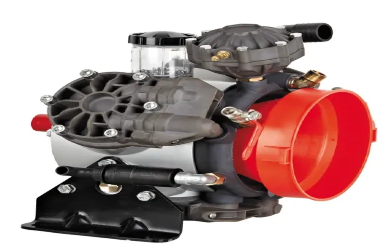
A good sizing process starts with the application and works through the entire system. This helps you choose a pump based on real needs instead of tank size or marketing specs.
Start by calculating total nozzle flow at your target operating conditions. Then confirm the pressure range required by the nozzle type and application method. Next, account for system losses from filters, hose length, regulator, and boom plumbing. Include bypass or agitation needs if your system uses them. After that, add a practical flow/pressure margin and verify the pump can deliver the required performance at that operating point—not just at maximum GPM or maximum PSI. This process improves big pump sprayer reliability because it matches the pump to the whole system.
An undersized pump may still spray, but the problems usually show up when conditions become less than ideal. These symptoms are common in systems that were sized too tightly.
If pressure drops when multiple nozzles are active, the spray pattern weakens at the end of a boom, or performance becomes unstable when switching between boom and handgun modes, the pump may not have enough margin. Another sign is having no room for future upgrades without replacing the pump. In a big pump sprayer, too little margin often leads to inconsistent coverage and constant adjustment.
Oversizing can also reduce performance quality, especially in systems that need accurate pressure control over a range of tasks. Bigger is not automatically better.
If the system is constantly bypassing excess flow, pressure is difficult to regulate in lower-flow tasks, or the pump adds unnecessary cost and power demand, it may be oversized for the job. A big pump sprayer should be future-ready, but future-proofing is not the same as choosing the largest pump available. The right pump is the one that stays controllable and efficient in your most common operating conditions.
The best pump selection decisions are made by starting with application requirements and system design, then adding a practical reserve for real-world use. This approach improves both performance and long-term value.
Tank size alone does not determine pump size. Pump type, nozzle setup, operating pressure, spray method, and chemical compatibility all matter more. Plan for realistic expansion—such as a moderate boom upgrade or occasional handgun use—rather than extreme future scenarios. For many buyers, working with a supplier who understands full-system sizing can help avoid both undersizing and costly oversizing in a big pump sprayer.
Yes. Boom systems usually have more nozzles, more plumbing, and greater pressure-loss sensitivity, so a sizing margin is often more important for stable operation.
Not fully. A regulator can control and limit pressure, but it cannot create flow or pressure capacity that the pump does not have.
Usually yes, but the margin can be smaller if your system is simple, your hose runs are short, and your operating conditions are stable.
Yes. Boom and handgun use often require different flow and pressure conditions, so the amount of useful margin may vary depending on which mode you use most.
Building a flow/pressure margin into pump sizing is usually the right decision for a big pump sprayer, because real spraying systems rarely operate under perfect, fixed conditions. A well-sized margin gives your pump enough reserve to maintain stable pressure at the nozzles, absorb normal system losses, and keep performance consistent as operating conditions change.
At the same time, pump sizing should remain balanced and application-driven. If the pump is too small, the sprayer may struggle with pressure drop, uneven output, and limited upgrade capacity. If the pump is oversized too aggressively, pressure control can become more difficult and the system may run less efficiently. The best approach is to size the pump around the complete sprayer system—nozzle flow, required PSI, hose and filter losses, bypass/agitation needs, and expected operating modes—so your big pump sprayer delivers dependable performance, easier operation, and better long-term value.