
 English
Views: 0 Author: Site Editor Publish Time: 2026-02-27 Origin: Site


Choosing the right yard sprayer pull behind setup is not just about buying the biggest tank you can afford. Many homeowners and property managers assume tank capacity alone determines whether a sprayer is suitable for their yard, but that often leads to poor results. The real answer depends on your actual spray area, how you spray, how often you refill, and how easy the yard is to navigate.
A pull-behind sprayer can save time, reduce walking, and improve coverage consistency, but only when it matches the size and layout of your property. This guide explains how to decide whether a yard sprayer pull behind is the right fit for your yard and how to choose a practical setup.
Yard size affects more than coverage area. It also affects refill frequency, application time, and operator fatigue. A larger yard usually benefits more from a pull-behind sprayer because towing a unit behind a lawn tractor or ATV is faster than carrying a backpack sprayer or using a handheld unit.
Tank size matters, but it does not tell the full story. A small tank may still work well if your spray rate is low and your refill point is close. On the other hand, a large tank may be inconvenient if your yard has tight turns, trees, or narrow spaces.
That is why a good yard sprayer pull behind choice should balance capacity with maneuverability and your normal spraying routine.
On larger properties, frequent refilling interrupts work and increases the chance of inconsistent mixing. On smaller properties, an oversized tow-behind sprayer may be harder to handle than it is helpful. Yard size helps define the starting point, but the best decision comes from understanding how much area you actually treat and how you move through it.
When people say “my yard is one acre,” that usually refers to total property size, not the sprayable area. For sprayer selection, what matters is the part of the yard you actually treat.
Your house, driveway, patio, garden beds, fences, and hardscape areas reduce the amount of land that needs spraying. If you estimate only by total lot size, you may buy a yard sprayer pull behind that is larger than necessary.
A better approach is to estimate your treated lawn and landscape zones separately. This gives you a more realistic picture of your spraying needs.
Even if two properties have the same square footage, one may take much longer to spray because of trees, slopes, edging, or landscaping features. Obstacles reduce spraying efficiency and may require more wand work instead of boom spraying. In those cases, maneuverability becomes just as important as tank size.
There is no single rule for every property, but yard size ranges can help guide the decision.
A pull-behind sprayer may still be useful on smaller yards if the owner wants faster application and less walking. However, compact units usually make more sense than larger tow-behind systems, especially where space is limited.
This is often the most practical range for a yard sprayer pull behind. A tow-behind setup can significantly reduce labor, improve coverage speed, and make regular lawn treatment more manageable. Many homeowners in this range benefit from a balanced setup with both boom and wand capability.
Larger properties often benefit most from pull-behind sprayers because refill time and travel time become major factors. A larger tank and wider boom can improve productivity, especially in open lawn areas. Still, the layout matters—if the property has many obstacles, a very large unit may not always be the fastest option.
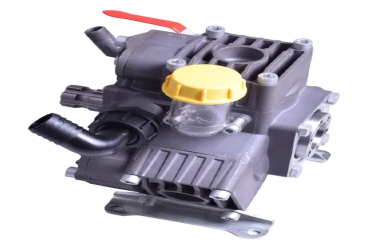
Yard size is only the starting point. The right yard sprayer pull behind also depends on how you spray and how your property is laid out.
Some treatments require more solution per area than others. A boom setup can cover open lawn faster, while a wand is better for precision work around beds, trees, or fence lines. Two yards of the same size may need very different sprayer setups because the spraying tasks are different.
Flat lawns are easier to spray consistently than uneven or sloped ground. Terrain affects towing stability and spray uniformity. Refill access also matters. If your water and mixing point is far from the spray zone, a larger tank may improve workflow more than any pump upgrade.
A simple decision process can help you avoid buying the wrong unit.
First, estimate your actual treatment area. Next, define your main tasks—fertilizing, weed control, pest control, or mixed use. Then estimate how much solution you typically apply and decide how many refills you are willing to do in one session.
This process helps you choose a yard sprayer pull behind that matches your routine, not just your yard size on paper.
Good spraying results come from setup and technique, not just equipment size. Even the best yard sprayer pull behind can produce uneven coverage if the operator skips planning, changes speed frequently, or ignores cleaning after use. Building a simple routine before and after spraying can improve accuracy, reduce waste, and extend equipment life.
Plan your route before mixing solution so you avoid overlap and missed strips. This is especially important on larger yards where repeated passes can waste product and create uneven application. Maintain a steady towing speed for consistent coverage, especially when using a boom. It is also smart to test with water when using a new nozzle setup or spraying a new property layout. A short water test can help you check spray pattern, pressure stability, and turning space before applying any chemical.
After use, flush the system and clean the tank, lines, and nozzles. Proper cleaning helps protect the pump and keeps your yard sprayer pull behind ready for the next application. If residue is left inside the system, it can cause clogging, reduce spray quality, and shorten the life of seals and hoses. For seasonal storage, make sure the sprayer is dry, stored in a protected area, and inspected before the next use.
If refilling repeatedly breaks your workflow or causes inconsistent mixing, your sprayer is probably too small for your routine.
Yes, if it supports both boom and wand spraying. You may need different nozzles or pressure settings for better control.
No. A wider boom improves coverage in open areas but may reduce maneuverability around trees, beds, and slopes.
If you cannot maintain steady speed, struggle on slopes, or experience unstable towing, your vehicle may be reducing spray consistency.
The best yard sprayer pull behind for your property depends on much more than yard size alone. While total acreage is a useful starting point, it should never be the only factor in your decision. A smarter approach is to begin with your actual treated area—the parts of the property you truly plan to spray—then evaluate how you spray, how often you spray, and how easily your yard can be covered with a tow-behind setup.
In practice, the right choice comes from balancing several factors: spray method (boom or wand), terrain conditions, refill frequency, towing vehicle capability, and overall workflow efficiency. For example, a medium-size yard with open space may work very well with a boom-equipped unit, while a similarly sized yard with trees, slopes, and landscaping beds may require a more flexible setup that combines boom and wand spraying. This is why two properties with the same square footage may need very different sprayer configurations.
It is also important to think about your long-term use, not just one application. If your current sprayer setup causes too many refills, uneven coverage, or difficult maneuvering, it can slow down maintenance and reduce spraying accuracy over time. A properly matched yard sprayer pull behind helps you maintain a steady spraying routine, improve consistency, and reduce wasted product and labor.
Ultimately, the best sprayer is the one that fits both your property and your maintenance habits. When capacity, maneuverability, and coverage are in balance, routine yard care becomes easier, faster, and more reliable—season after season.