
 English

Views: 0 Author: Site Editor Publish Time: 2025-12-31 Origin: Site


You might wonder which method works best for spraying—boom sprayer or boomless. The answer depends on what you need. Flat fields and precise coverage often call for a boom sprayer. Rough terrain or areas with obstacles may suit boomless spraying. Your choice shapes how well you protect crops and manage resources. Think about your land, your equipment, and your goals before you decide.
Boom sprayers give even coverage and are very precise. They work best in big, flat fields and with row crops.
Boomless sprayers work well on rough ground and around obstacles. They are easy to move and use quickly.
Think about the wind when you spray. Boom sprayers help stop drift. Boomless sprayers can be moved more by wind.
Boomless sprayers are easier to take care of because they have fewer parts. Boom sprayers need more care and fixing.
Pick your sprayer by looking at your land, your crops, and your money. This helps you get the best results.
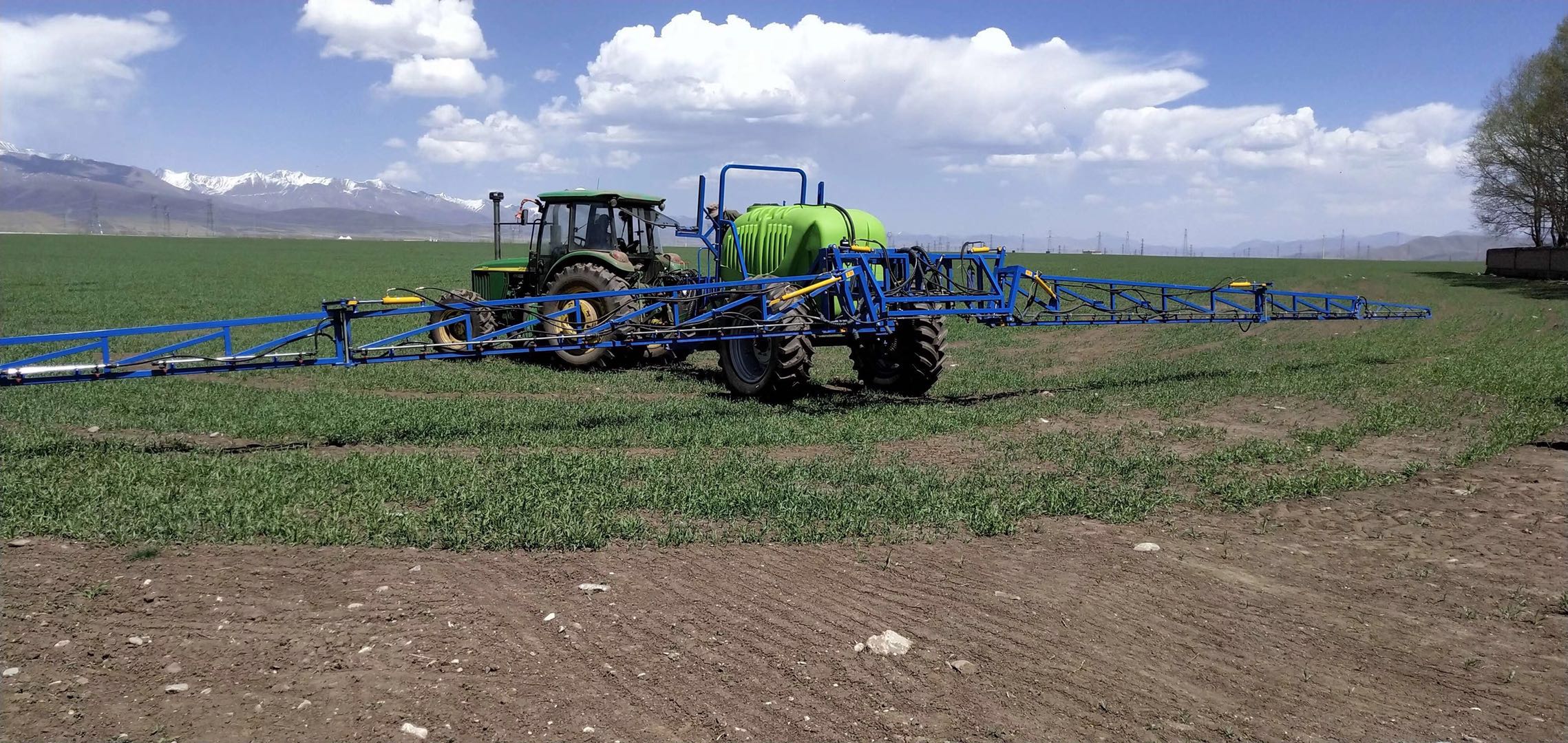
When you use a boom sprayer, you can cover large areas of land quickly and evenly. The boom sprayer uses a long arm, called a boom, that stretches out on both sides of the sprayer. This boom holds several nozzles spaced at regular intervals. As you drive the sprayer across your field, the pump pushes liquid from the tank through hoses to each nozzle. The nozzles then spray the liquid in a controlled pattern. You can adjust the pressure and flow to match your needs. This setup helps you apply chemicals or fertilizers with great accuracy.
Boom sprayers usually have nozzle spacings of about 20 inches. Some models offer 15-inch or 10-inch spacings. To get even coverage, the spray pattern at the target height should be twice the nozzle spacing. For example, with 20-inch spacing, you need a 40-inch spray width. This method lets you apply between 5 and 15 gallons per acre, which works well for most crops.
A boom sprayer has several key parts that work together to deliver the spray. Here is a table to help you understand each component and its job:
Component | Function |
|---|---|
Sprayer Boom | Carries the liquid across a wide swath to each spray nozzle. |
Nozzles | Control the amount of liquid applied, the spray pattern, and droplet size. |
Pump | Provides the pressure needed to push the liquid through the hoses and out of the nozzles. |
Tank | Stores the liquid being sprayed, made of durable, chemical-resistant material. |
Control System | Regulates the flow of liquid for precise application, using manual or electronic controls. |
You will find that a boom sprayer works best for several types of spraying. Common applications include:
Spraying pesticides to protect crops from insects
Spraying herbicides to control weeds
Spraying fertilizers to boost plant growth
You can use a boom sprayer for many crops, such as corn, soybeans, and wheat. The even coverage and precise control make it a popular choice for farmers who want to manage large fields efficiently.
You may find that boomless spraying uses a different design than traditional boom sprayers. Instead of a long arm with many nozzles, a boomless sprayer usually has one or two special nozzles. These nozzles spray out to the sides, creating a wide pattern. This setup lets you cover more ground in a single pass, especially when you work on rough or uneven land.
Boomless sprayers offer versatility. You can use them where trees, fences, or rocks make it hard to use a boom.
The spray pattern from a boomless nozzle spreads out in a fan shape, reaching up to 20 feet wide in many cases.
You do not need to worry about the boom hitting obstacles, so you can move faster and finish spraying sooner.
Tip: Boomless spraying works best when you need to treat areas that are hard to reach with a regular boom sprayer.
You will often see boomless sprayers mounted on small tanker trucks or utility vehicles. These machines have a tank that holds the liquid and a rear-facing spout or nozzle that releases the spray. For example, water trucks use this method to control dust on construction sites or roads. Farmers also use boomless spraying for pastures, ditches, or areas with lots of obstacles.
Here is a table showing how the coverage width compares:
Sprayer Type | Average Coverage Width |
|---|---|
Boomless | Approximately 20 ft |
Boom | 140 in (11.67 ft) |
Boomless sprayers can be cost-effective, especially if you buy used equipment. However, they do not give you the same precision as a boom sprayer. You may notice that the spray only goes in a straight line behind the vehicle, which can limit your control. Still, boomless spraying helps you cover large, uneven areas quickly and easily.
You need to think about how each sprayer covers your field and how precise the application is. Boom sprayers use multiple nozzles spaced evenly along a long arm. This design gives you even coverage and high precision. You can control exactly where the spray lands. This helps you avoid missing spots or overlapping too much.
Boomless sprayers use one or two special nozzles that spray out in a wide fan. You can cover a large area quickly, but the spray pattern is less uniform. You may see some areas get more spray than others. This matters if you want to use less chemical or protect certain crops.
Here is a table to help you compare:
Feature | Boom Sprayers | Boomless Sprayers |
|---|---|---|
Coverage | Wide and even | Wide but less uniform |
Precision | High | Moderate |
Spray Pattern | Consistent and controlled | Less consistent |
Boom sprayers place the nozzles close to the ground. This setup reduces drift and keeps the spray where you want it. You get even application, which works well for fields and pastures. Boomless spraying helps you in rough or uneven areas, but you may not get the same level of control.
Wind can move spray droplets away from your target. You need to watch the weather before you start spraying. If the wind speed doubles, drift can increase by almost 700% at 90 feet downwind. You should spray when the wind is 10 mph or less.
Boom sprayers keep the nozzles low. This reduces the chance of wind carrying droplets away. If you raise the boom from 24 to 48 inches, drift can increase by 350% at 90 feet downwind. The farther you move from the sprayer, the less drift you see. At 200 feet, only 20% of the drift remains compared to 100 feet.
Boomless sprayers create larger droplets, but the spray travels farther from the nozzle. This can make drift worse, especially on windy days. You need to be careful when using boomless spraying near sensitive crops or water sources.
Spray when wind is calm.
Keep booms low to the ground.
Watch for drift, especially with boomless spraying.
You must match your sprayer to your land. Boom sprayers work best in large, open fields. You get the most benefit when the ground is flat and free of obstacles. The long boom can hit rocks, trees, or fences if you use it in rough terrain.
Boomless sprayers shine in complex or obstructed areas. You can spray around trees, ditches, or uneven ground without worrying about damaging a boom. This makes boomless spraying a good choice for pastures, roadsides, or construction sites.
Here is a quick look:
Sprayer Type | Suitable Terrain Types |
|---|---|
Boom Sprayers | Large, open fields |
Boomless Sprayers | Complex or obstructed areas |
You need to consider how much time and money you will spend on upkeep. Boom sprayers have many moving parts. You must check and replace nozzles, hoses, and the boom itself. This means higher maintenance costs and more time spent on repairs.
Boomless sprayers have fewer parts. You only need to care for one or two nozzles and a simple spray system. This lowers your maintenance costs and makes repairs easier.
Here is a table to compare:
Sprayer Type | Maintenance Complexity | Wearable Parts Count |
|---|---|---|
Boom Sprayer | High | Multiple |
Boomless Sprayer | Low | Few |
You may pay more up front for a boom sprayer, but you get better control and coverage. Boomless spraying costs less to maintain and works well in tough conditions.
Tip: Choose the sprayer that fits your land, your budget, and your spraying needs.
If you pick a boom sprayer for your field, you get many good things. Experts say boom sprayers help you work fast and keep your crops safe. Here are some main advantages:
You can spray chemicals right where you want. This means you do not waste as much and use your supplies better.
The sprayer’s design helps keep the soil from getting packed down. Good soil helps your plants grow strong and healthy.
New boom sprayers have safety parts that protect you. These parts help stop spills and keep you safe while spraying.
You can spray big areas fast and evenly. This saves time and lets you finish before the weather changes.
You can change the pressure and flow. This helps you use the right amount for each crop or chemical.
Tip: A boom sprayer lets you control where and how much you spray. This helps you get the best results for your field.
You also need to think about the hard parts of using a boom sprayer. The table below shows some common problems and what they mean for your spraying jobs:
Disadvantage | Description |
|---|---|
Maintenance Requirements | You have to clean and check nozzles a lot. If nozzles get blocked, spraying will not be even and your crops can get hurt. You also need to look at the boom for damage often. |
Limited Maneuverability | Big sprayers are hard to move on rough ground. The long boom can hit things, and it is hard to turn, so you might miss some spots. |
Environmental Impact | Spray can drift to other places. Using lots of water can be bad if water is hard to find. Spraying too much can hurt the soil and animals. |
Operator Skill Requirements | You need to learn how to set up and use the sprayer. If you make mistakes, you might spray unevenly or waste chemicals. |
Compatibility Issues | Some chemicals can hurt the sprayer. Thick fertilizers can block the sprayer. The boom can hurt soft crops, so you may need other tools or ways to spray. |
Weather Dependence | Spraying works best when the weather is good. Wind can blow spray away, heat can make it dry up, and rain can wash it off, so you might have to wait. |
You should think about these problems and the good things before you choose a boom sprayer for your field.
You will notice several advantages of boomless spraying when you work in fields with many obstacles. This method helps you move your sprayer around trees, fences, and ditches without trouble. You do not have to worry about long boom arms getting stuck or damaged. Many farmers like how quickly they can set up a boomless sprayer. Fewer parts mean you spend less time on maintenance and more time spraying.
Here is a table that shows what farmers report as the main benefits:
Benefit | Description |
|---|---|
Enhanced Maneuverability | Easily navigate around trees, fences, and ditches. |
Quick Setup | Fewer parts make for faster deployment and less maintenance. |
Compact Design | Ideal for areas with limited storage space. |
You can store a boomless sprayer in small spaces. The compact design helps if you do not have a large shed or barn. You will find this especially useful if you need to spray in tight or uneven areas. The advantages of boomless spraying make it a smart choice for rough terrain and hard-to-reach spots.
Tip: If you want to finish spraying quickly and avoid obstacles, a boomless sprayer can save you time and effort.
You should also think about the drawbacks before you choose a boomless sprayer. Wind can move the spray away from your target. Boomless sprayers are more affected by wind, which increases the risk of chemical drift. You may not get the same coverage as you would with a boom sprayer. The spray pattern can miss some spots or overlap in others.
The table below highlights the main disadvantages:
Drawbacks of Boomless Spraying | Description |
|---|---|
Less Wind Resistance | Boomless sprayers are more affected by wind, increasing the risk of drift. |
Potentially Less Coverage Efficiency | Boomless sprayers may not cover areas as effectively as boom sprayers. |
You need to watch the weather closely when using a boomless sprayer. Spray only when the wind is calm. You may also need to check your work to make sure you did not miss any areas. If you want very precise spraying, a boom sprayer might work better for your needs.
A boom sprayer is best when you want even spraying on big fields. This method works well for row crops like corn, soybeans, and wheat. You can control how much chemical you use and where it goes. This helps protect your crops and stops waste. Spray with a boom on days when the wind is low and the weather is dry. This keeps the spray on your field and stops it from drifting away.
Here is a table that shows when a boom sprayer works best:
Scenario | Description |
|---|---|
Pest Control | You can spray pest products evenly to protect the whole field. |
Weed Management | You spread herbicides evenly, which helps crops grow better. |
Fertilizer Application | You put liquid fertilizer over large areas so crops get what they need. |
Soil Treatment | You add things to the soil to help plants grow more. |
You get the most out of a boom sprayer in these cases: Large, open fields with not many obstacles; Row crops where you need to be exact; Fields that need chemicals spread evenly.
Tip: Pick a boom sprayer if you want less drift from wind, even spraying, and less wasted spray. This saves money and keeps your crops safe.
Boomless spraying is good for places with lots of obstacles or rough ground. You can move around trees, fences, and ditches without breaking your sprayer. You finish spraying faster because you do not have to worry about a long boom arm.
Here are some times when boomless spraying is a good idea: You need to spray pastures with bumpy ground; You have to treat ditches or roadsides with lots of things in the way; You work in orchards and need to spray around trees.
Boomless sprayers are good for tough jobs, especially on uneven land.
They can move around things like poles and fences easily.
They are great for orchards because you can spray around trees without breaking anything.
You might also pick a boomless sprayer if you want to check your spraying easily and do not want to fix your sprayer a lot. This sprayer works well for places that are not crops, like construction sites or along fences.
Note: Boomless spraying lets you work in tight spots, but you need to watch out for wind and drift. Spray when it is calm for the best results.
Pick your sprayer based on your land and what you want to do. Here are some tips to help you choose:
Use a boom sprayer for big fields, row crops, and when you need even spraying.
Pick boomless spraying for pastures, ditches, orchards, and places with lots of things in the way.
Boom sprayers are best for spraying herbicides, pesticides, and fertilizer in open fields.
Boomless sprayers are good when you need to move around easily and set up fast.
Sprayer Type | Advantages |
|---|---|
Boomless Sprayer | Easier to move, easy to check spraying, less fixing needed. |
Boom Sprayer | Better in wind, covers well, and does not waste spray. |
You make the best choice when you think about your field size, crop type, and how hard your land is to spray. If you need to spray a big, flat field and want to be exact, use a boom sprayer. If your land is rough or has lots of obstacles, boomless spraying will help you finish fast and safely.
When you look at boom sprayers and boomless sprayers, you notice they work in different ways. You should pick the sprayer that matches your land, crops, and what you want to do. The table below shows the main things to think about for each sprayer.
Factor | Boom Sprayers | Boomless Sprayers |
|---|---|---|
Coverage | Wide, even coverage for large fields | Wide but less uniform, best for rough terrain |
Precision | High accuracy, less overlap | Moderate accuracy, more overlap possible |
Wind Resistance | Strong wind resistance due to low nozzle placement | Higher drift risk, less wind resistance |
Maneuverability | Harder to move in tight or obstacle-filled areas | Easy to maneuver around trees, fences, ditches |
Maintenance | More parts, higher maintenance needs | Fewer parts, easier and quicker maintenance |
Spray Monitoring | Many nozzles, harder to check each one | 1-2 nozzles, easy to monitor spray pattern |
Efficiency | Efficient use of chemicals, saves time and money | Less efficient in open fields, quick setup |
Storage | Needs more storage space | Compact design, fits in small spaces |
Best Use Case | Flat, open fields and row crops | Uneven ground, pastures, orchards, obstacles |
Tip: Pick a boom sprayer if you want to spray evenly and keep drift low. Choose a boomless sprayer if you need to spray around things or on bumpy land.
You can also see the top benefits for each sprayer:
Boom Sprayers: They cover big areas evenly, use chemicals well, and work better in wind.
Boomless Sprayers: They are easy to move, set up fast, need less fixing, and fit in small places.
Picking the right sprayer helps keep your crops safe and saves your supplies. Think about how big your field is, what your land is like, and how much time you want to spend fixing your sprayer. The right sprayer makes your job easier and helps you do it well.
When you decide between a boom sprayer and boomless spraying, you need to look at several important factors. Start by thinking about your field’s terrain. Flat, open land works well with a boom sprayer because you get even coverage and less drift. If your land has hills, trees, or fences, a boomless sprayer helps you move around obstacles easily.
You should also consider how much time you want to spend on maintenance. Boom sprayers have more parts, so you need to check and clean them often. Boomless sprayers have fewer parts, which means less time fixing and cleaning. Wind conditions matter too. Boom sprayers keep the spray low, so wind does not move it as much. Boomless sprayers can lose more spray to wind, especially on breezy days.
Farm size and crop type play a big role. Large fields with row crops like corn or wheat benefit from the precision of a boom sprayer. Pastures, orchards, and uneven ground suit boomless sprayers. You also need to think about your budget. Boomless sprayers can save money over time because they use fewer chemicals and need less maintenance.
Tip: Always match your sprayer to your land, crop needs, and budget for the best results.
You can learn from how other farmers choose their sprayers. Here are some real-world examples:
A farmer with a large, flat cornfield uses a boom sprayer to cover the area quickly and evenly.
An orchard owner picks a boomless sprayer to move easily between rows of trees and avoid damaging branches.
A rancher sprays pastures with a boomless sprayer because the land has ditches and rocks.
The table below shows how each sprayer fits different needs:
Sprayer Type | Advantages | Disadvantages |
|---|---|---|
Boom Sprayer | Better wind resistance, even coverage | Hard to maneuver, more maintenance |
Boomless Sprayer | Easy to move, quick setup, less maintenance | Less uniform coverage, more drift potential |
You should assess your spraying needs, field layout, and maintenance preferences. If you want efficiency in flat areas, choose a boom sprayer. For rough terrain, a boomless sprayer saves time and effort.
You have learned that boom sprayers are best for big, open fields. Boomless sprayers work well on bumpy land or places with things in the way. Some people pick the wrong sprayer because they do not think about what kind of spraying they need. Others forget to check how often they will spray. Some do not remember to plan for fixing and cleaning their sprayer.
Not thinking about the type of spraying you need
Not checking how many times you will spray
Not planning for fixing and cleaning
Before you pick a sprayer, look at your land, how much money you have, and what you want to do. You can ask experts at classes or read tips from top companies. Picking the right sprayer helps you do a better job and keeps your crops safe.
You use a boom sprayer for even, precise coverage on flat land. Boomless sprayers work better on rough or obstacle-filled ground. Boom sprayers have multiple nozzles on a long arm. Boomless sprayers use one or two nozzles to spray wide areas.
Yes, you can use a boomless sprayer for herbicides. You should check the label for application instructions. Boomless sprayers may not give as even coverage as boom sprayers, so you need to watch for missed spots or overlaps.
You can spray when the wind is calm, usually below 10 mph. Lower the nozzle height if possible. Use larger droplet nozzles to help keep the spray close to the ground.
Tip: Always check the weather before you spray to avoid drift.
You will find boomless sprayers easier to maintain. They have fewer parts and no long boom arms. You spend less time checking and cleaning nozzles. Boom sprayers need more regular maintenance because of their many moving parts.